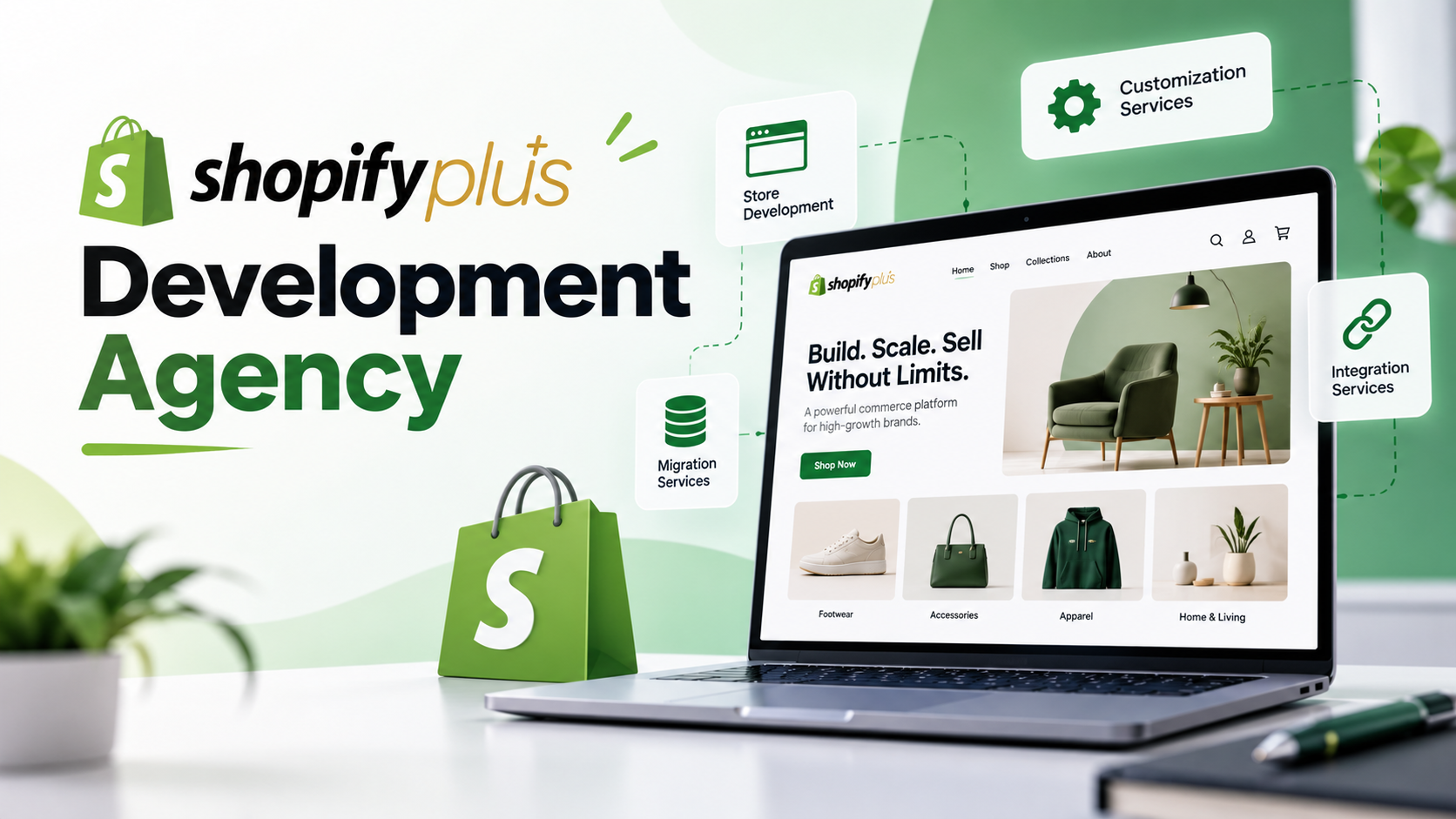
✓Services: Explore store development, customization, migration, and third-party integrations.
✓Development costs: Understand the factors that influence Shopify Plus project budgets in the US.
✓Choosing an agency: Learn how to evaluate technical expertise, relevant experience, and ongoing support.
✓Business growth: Identify when Shopify Plus features may be useful for your ecommerce operations.
As an ecommerce business grows, its technology needs change. A store that once worked well with a standard theme and a few apps may eventually need more advanced integrations, custom shopping experiences, streamlined operations, and support for higher order volumes.
This is where a Shopify Plus development agency can help. The right development partner can build a storefront around your business requirements, connect Shopify with your existing systems, and create a more efficient buying experience for your customers.
For US businesses, choosing an agency is not just about design or development skills. It also means finding a team that understands American shoppers, payment and shipping expectations, ecommerce operations, and the technical requirements of a growing online store.
In this guide, we explain what a Shopify Plus development agency does, which services to consider, how much development may cost, and what to look for before hiring a partner.
What Is a Shopify Plus Development Agency?
A Shopify Plus development agency helps businesses design, build, customize, integrate, and maintain ecommerce stores using Shopify Plus.
Unlike a basic store setup, enterprise-focused development may involve complex product catalogs, custom storefront functionality, third-party system integrations, wholesale operations, and migration from another ecommerce platform.
Depending on your requirements, a development agency may help with:
- Custom Shopify Plus store development
- Theme design and storefront customization
- Migration from platforms such as Magento, WooCommerce, or BigCommerce
- ERP, CRM, inventory, and fulfillment integrations
- Checkout and customer account customization
- B2B and wholesale commerce workflows
- Store performance, testing, and ongoing maintenance
The right scope depends on your current setup, business goals, and the problems you need to solve. Not every growing business needs a fully custom storefront or a complex technology stack.
What Does a Shopify Plus Development Company Do?
A Shopify Plus development company typically manages the technical work required to launch or improve an online store. Its responsibilities can extend from initial planning to development, testing, launch, and ongoing support.
1. Shopify Plus Store Development
A professional team can build a store around your brand, product catalog, customer journey, and operational requirements.
This can include custom page layouts, product templates, collection pages, navigation, search, filtering, and mobile-friendly shopping experiences.
The goal is to create a store that is easy to use and maintain while supporting your business as it grows.
2. Custom Theme Development
A prebuilt theme may be suitable for some businesses, but others need more control over the storefront experience.
Custom theme development can help you create distinctive product pages, tailored navigation, interactive product sections, and reusable content layouts without adding unnecessary complexity.
Before building a theme from scratch, ask whether customizing an existing theme could achieve the same result at a lower cost.
3. Shopify Plus Customization Services
Shopify Plus customization services help businesses adapt their stores to specific commercial and operational needs.
Examples include:
- Custom product configuration and selection experiences
- Product bundles and promotional functionality
- Personalized storefront content
- Custom pricing or discount logic
- Customer account enhancements
- Custom applications and workflow automation
The best solution is not necessarily the one with the most features. It is the one that addresses a clear business requirement without making the store difficult to maintain.
4. Shopify Plus Migration Services
Moving an established ecommerce store requires more than transferring products and publishing a new design.
Shopify Plus migration services may include:
- Product and variant migration
- Customer and order data transfer
- Collection and category mapping
- URL redirects and SEO preservation
- Integration replacement or reconnection
- Theme redevelopment
- Payment, shipping, and tax configuration
- Pre-launch testing
A migration plan should identify which data can be transferred, which functionality needs rebuilding, and which existing URLs must be preserved or redirected.
SEO deserves particular attention. Missing redirects, incorrect canonical tags, broken internal links, or poorly mapped product pages can affect organic visibility after launch.
5. Shopify Plus Integration Services
Many established ecommerce businesses rely on multiple systems to manage orders, inventory, accounting, customer relationships, and fulfillment.
Shopify Plus integration services connect the store with the tools used to run the business.
Common integration projects include:
- Enterprise resource planning (ERP) systems
- Customer relationship management (CRM) platforms
- Inventory and warehouse management systems
- Shipping and fulfillment platforms
- Accounting and financial software
- Marketing automation and customer service tools
- Product information management (PIM) systems
Before choosing an integration approach, clarify which system should be the source of truth for products, inventory, customer records, and order status. This helps reduce data conflicts and manual work.
6. B2B and Wholesale Ecommerce Development
Businesses selling to distributors, retailers, or wholesale buyers may need a different purchasing experience from their direct-to-consumer storefront.
Shopify B2B features are available across multiple Shopify plans, but feature availability varies. Shopify Plus includes additional capabilities such as unlimited B2B market catalogs, direct catalog assignment to companies, and certain deposit and partial-payment options. Review the official Shopify B2B plan comparison before finalizing your requirements.
A development partner can help configure the appropriate B2B experience, connect business systems, and customize workflows around your wholesale operations.
7. Store Optimization and Ongoing Support
Launching a store is only one part of running an ecommerce business. Products, campaigns, integrations, and customer expectations continue to change.
Ongoing support may cover:
- Technical maintenance and troubleshooting
- Mobile usability improvements
- Theme and app compatibility checks
- Checkout and conversion testing
- Integration monitoring
- Accessibility improvements
- Performance and SEO checks
A useful maintenance agreement should define response times, included development hours, emergency support, and how additional work will be priced.
Shopify Plus Developers: What Skills Should You Look For?
Experienced Shopify Plus developers should understand more than Liquid, HTML, CSS, and JavaScript. Their skills should match the complexity of your project.
Depending on your requirements, look for experience with:
- Shopify theme architecture and Liquid
- Shopify APIs and custom app development
- Shopify Functions and supported checkout extensions
- Third-party system integrations
- Store migration and data validation
- Responsive design and accessibility
- Automated testing and release management
- Ecommerce SEO and performance considerations
For complex projects, ask whether the agency has specialists for design, development, integrations, quality assurance, and project management.
You should also ask how the team handles documentation, code ownership, deployment, and post-launch support. These details matter when your internal team needs to maintain the store later.
Shopify Plus Experts vs. a General Ecommerce Agency
A general ecommerce agency may work across several platforms, while Shopify Plus experts focus on the Shopify ecosystem and its technical capabilities.
Neither option is automatically better. The right choice depends on the project.
| Evaluation factor | Shopify-focused agency | General ecommerce agency |
| Shopify-specific knowledge | May have deeper platform specialization | Depends on its Shopify experience |
| Multi-platform migration | Suitable if it has relevant migration experience | May offer broader platform coverage |
| Custom Shopify functionality | Look for verified Shopify project experience | Confirm its Shopify-specific capabilities |
| ERP and CRM integrations | Depends on integration expertise | Depends on integration expertise |
| Ongoing support | Review the support model | Review the support model |
Do not select a partner based on its title alone. Ask for examples of comparable projects, the technical decisions behind them, and the results the client was able to verify.
The cost of a Shopify Plus project depends on its scope, design requirements, integrations, data migration needs, and ongoing support expectations.
The following figures are illustrative planning ranges, not verified industry averages or agency quotes.
| Project type | Illustrative development budget |
| Theme-based setup and configuration | $10,000–$25,000 |
| Custom Shopify Plus storefront | $25,000–$60,000 |
| Store with complex custom functionality | $50,000–$120,000+ |
| Enterprise migration and integrations | $40,000–$150,000+ |
| Ongoing development and maintenance | $1,000–$8,000+ per month |
These ranges may overlap because migration complexity, custom features, and integration requirements vary significantly from one project to another.
What Affects the Cost?
Design complexity: A customized storefront with multiple templates and unique interactions generally requires more work than a lightly modified theme.
Integration requirements: Connecting Shopify to ERP, CRM, warehouse, or fulfillment systems can add substantial development and testing work.
Migration scope: The volume and quality of existing data, custom functionality, URL structures, and historical records all affect migration effort.
Custom applications: Features that cannot be delivered through existing Shopify functionality or suitable apps may require custom development.
Testing and support: Projects that need extensive regression testing, complex workflows, or ongoing support require additional resources.
Remember to budget separately for Shopify subscription fees, paid themes, third-party apps, payment processing, and other operating expenses. Shopify Plus pricing can change, so check the official Shopify Plus plan details for current US pricing and terms.
How to Choose the Right Shopify Plus Development Agency
Choosing a development partner is an important business decision. Use the following checklist before signing a contract.
1. Review Relevant Portfolio Projects
Look for stores with requirements similar to yours, such as large product catalogs, custom product pages, international selling, wholesale workflows, or complex integrations.
Ask what the agency delivered and which parts of the work were completed by its own team.
2. Ask for Technical Case Studies
A polished storefront does not necessarily demonstrate strong technical execution.
Ask for case studies covering the original problem, implementation approach, integrations, migration process, and measurable results where available.
If an agency claims to have improved conversion rates or revenue, ask how the results were measured and over what period.
3. Evaluate Its Discovery Process
A reliable agency should ask about your business model, customers, existing technology, operational challenges, and growth plans before proposing a solution.
Be cautious if the initial proposal recommends a complete rebuild without examining whether your current store can be improved incrementally.
4. Confirm the Project Scope
Your proposal should clearly describe:
- Deliverables and milestones
- Design and development responsibilities
- Included integrations and functionality
- Content and data migration responsibilities
- Testing and acceptance criteria
- Launch support
- Post-launch maintenance
- Change-request and payment terms
A detailed scope makes it easier to compare proposals from different agencies.
5. Discuss Communication and Ownership
For US businesses working with an agency in another time zone, establish communication expectations early.
Confirm meeting schedules, response times, project reporting, escalation procedures, and who will manage technical decisions.
Also confirm that your business retains the appropriate access to its Shopify store, domain, analytics, source code, and related accounts.
6. Understand the Long-Term Support Model
Ask what happens after launch. Find out whether the agency offers ongoing development, emergency fixes, integration monitoring, and a defined process for future improvements.
The best partner should be able to explain how it will support the store after the initial project is complete.
When Should a Business Invest in Shopify Plus Development?
Shopify Plus development may be worth considering when your business has requirements that go beyond a straightforward store setup.
Potential reasons include:
- You need advanced checkout customization.
- Your wholesale operation requires Plus-specific B2B features.
- Your organization needs more complex integrations or custom applications.
- You manage multiple storefronts or expansion stores.
- Your existing store has become difficult to maintain.
- Your team needs a more structured approach to enterprise ecommerce operations.
However, a larger business does not automatically need every Plus feature. Shopify's standard plans already include many ecommerce and B2B capabilities.
Start by documenting your requirements and checking which features are available on your current plan. Upgrade when the additional capabilities justify the platform cost and implementation effort.
Why Consider Web Panel Solutions for Shopify Development?
Web Panel Solutions provides web and ecommerce development services for businesses that need a store aligned with their products, customers, and operational goals.
A development engagement should begin with understanding your existing store, business priorities, required functionality, and integration needs. From there, the team can help define a practical development scope rather than recommending unnecessary complexity.
Whether you are planning a new ecommerce store, improving an existing storefront, or evaluating a platform migration, discuss your requirements before deciding on the final architecture.
Explore our ecommerce website development services to learn more about our development approach.
For a Shopify Plus project, ask for a clear scope, relevant technical examples, a realistic timeline, and a transparent cost estimate before moving forward.
Final Thoughts
Choosing a Shopify Plus development agency is about finding a partner that understands both your technology requirements and your business objectives.
Before making a decision, evaluate the agency's relevant experience, integration capabilities, migration process, communication practices, and long-term support model. Compare proposals based on what will actually be delivered-not just the quoted price or the appearance of a portfolio.
A well-planned Shopify Plus project should give your team a store that is easier to manage, better aligned with customer needs, and prepared for the next stage of business growth.
If you are planning a new Shopify store, migration, or custom ecommerce project, start by defining your requirements and discussing the most practical solution for your business.