We spark change by bringing the right configuration of industry in sights, most advanced software to unlock new value that fits your specific requirements.
We spark change by bringing the right configuration of industry in sights, most advanced software to unlock new value that fits your specific requirements.
We spark change by bringing the right configuration of industry in sights, most advanced software to unlock new value that fits your specific requirements.Explore Mobile Application
We spark change by bringing the right configuration of industry in sights, most advanced software to unlock new value that fits your specific requirements.
Software today isn’t just about features - it’s about reliability, speed, and user experience. Yet, many businesses still struggle with bugs, crashes, and poor performance after launch.
The real problem?
Lack of a proper testing strategy.
In this guide, we’ll walk you through proven software testing strategies that help teams catch issues early, improve product quality, and deliver seamless user experiences.
Why Software Testing Strategy Matters
A good testing strategy is not just about finding bugs - it’s about preventing them.
Tools like JMeter help simulate real-world traffic.
Common Mistakes to Avoid
Many teams fail not because they don’t test, but because they test incorrectly.
Avoid these mistakes:
Testing too late
Ignoring automation
Poor test coverage
No clear strategy
Real-World Example
A startup improved its app performance by 60% after implementing:
Automation testing
Continuous integration
Result: fewer crashes and better user retention.
Final Thoughts
Software testing is not just a phase - it’s a continuous process that directly impacts your product’s success.
By applying the right strategies, you can:
Reduce bugs
Improve performance
Deliver better user experiences
If you're looking to build high-quality, bug-free software, Web Panel Solutions can help you implement advanced testing strategies tailored to your business.
Software testing strategies are structured approaches used to test applications effectively. They help identify bugs, improve performance, and ensure the software meets user requirements before release.
Testing strategies are important because they reduce errors, improve software quality, and save development costs by identifying issues early in the process.
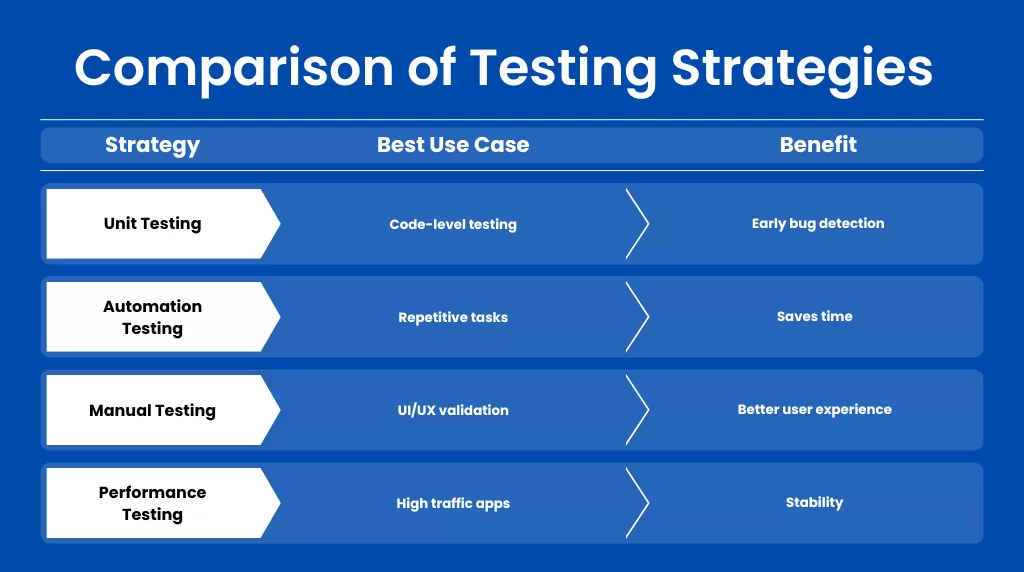
Manual testing involves human testers checking the application, while automated testing uses tools and scripts to perform repetitive tasks quickly and efficiently.





![Top Nearshore Software Development Companies in the USA [2026]](https://webpanelsolutions.com/assets/images/blog/blog_1785238272.webp)