Creating a fintech application has become essential for financial service providers, as it enables them to reach a broader audience. The last ten years have significantly transformed the fintech landscape, resulting in remarkable growth and market acceptance.
This evolution allows users to access their bank accounts, funds, and other financial services conveniently from home. Consequently, this expanding market has drawn investors to develop their own fintech applications.
According to Market Data Forecast, the global fintech sector is projected to grow from USD 209.74 billion in 2024 to USD 1,583.05 billion by 2033, reflecting a compound annual growth rate (CAGR) of 25.18% during this period.
If you are considering entering the fintech space and wish to understand the fintech app development costs associated, this blog is tailored for you. By its conclusion, you will be better equipped to plan your fintech application with insights into all cost-related factors involved in the project. Let’s get started!
Understanding Fintech App Development Costs
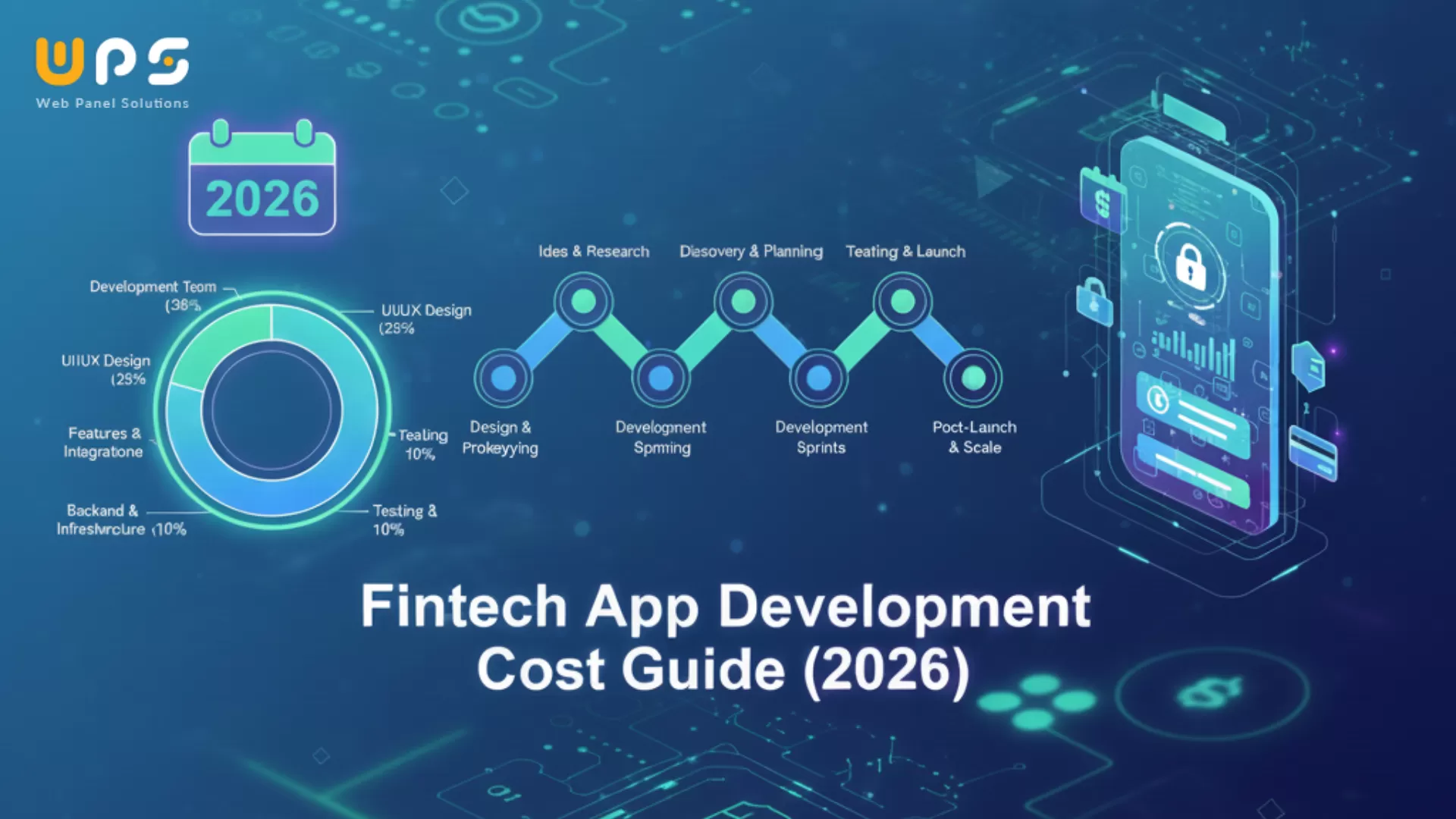
When engaging an experienced app development company for a fintech application, costs can range between $20,000 and $300,000. This estimate considers various elements such as current industry trends and the overall development process.
The disparity between the cost of entry-level applications and high-spec versions can be significant due to multiple factors like feature selection and technology integration that influence development expenses. Different stages of development incur varying costs; thus, individual needs will lead to different pricing structures.
For example:
- A basic fintech app featuring adequate security measures and online banking capabilities could be developed for approximately $30,000-$40,000.
- A minimalistic application might start at around $20,000 but could increase up to $80,000 with additional features.
- Conversely, an advanced app incorporating cutting-edge technology may range from $70,000 to $300,000.
It’s important to note that while $300,000 serves as a reference point for expenses in building a sophisticated app, ongoing investments may be necessary due to continuous technological advancements especially in areas like customer support where innovation is crucial for meeting evolving client expectations.
Types of Fintech Apps and Their Costs
Fintech encompasses various sectors including banking solutions, transaction management systems, payment processing tools, and financial management applications. As functionalities differ greatly among these types of applications, so too does their development cost.
Here are examples of popular fintech app categories along with their estimated mobile app development costs:
Digital Banking Apps
These apps digitize traditional banking services such as account management and fund transfers. Given their reliance on complex integrations and optimizations for user experience demands substantial investment ranging from $20,000 to $100,000.
eWallet Apps
These digital wallet applications facilitate online transactions by allowing users to store funds securely while enabling easy payments and transfers. Building an e-wallet app ranges from $20,000 to $80,000 depending on added features.
Peer-to-Peer Lending Platforms
P2P lending platforms have recently gained traction thanks largely to robust backend systems facilitating secure transactions. Basic P2P lending apps can start at around $20,000 but may escalate up towards or beyond $100k based on complexity.
Understanding these fintech mobile app development cost ranges specific to different types of fintech applications aids in effectively budgeting according to your particular requirements.
Key Factors Influencing Fintech App Development Costs
When determining the overall expenditure related to developing a fintech app several key considerations come into play:
Features & Functionality
Deciding on required features up front is essential. Advanced functionalities directly correlate with increased complexity and consequently higher costs of your application.
UI/UX Design
The decisions made regarding user interface (UI) design affect both engagement levels and retention rates. Investing wisely here can prove beneficial but also impacts the budget significantly depending on design choices made.
App Complexity
The first step involves defining the complexity level you desire for your application which will influence your budget significantly based on chosen technologies and development methodologies.
Security & Compliance
Selecting appropriate security measures is paramount as they directly affect both compliance requirements which vary by region and overall fintech app development costs. These costs are incurred during development, due diligence processes, surrounding regulatory standards like KYC or AML compliance measures add further expense beyond foundational security protocols such as data encryption practices (e.g., GDPR).
Platform Choice (iOS vs Android)
Your target audience influences whether you opt for native builds like iOS/Android platforms or pursue cross-platform strategies. Each approach carries distinct implications concerning budget allocation since maintaining separate codebases escalates expenditures. Accordingly, relative user bases targeted through respective platforms should guide strategic decision-making here too!
Third-Party Integrations
Essential integrations like payment gateways, analytics tools etc. are necessary components driving successful functionality provision across diverse use cases. Any fees incurred alongside integration processes must therefore also be accounted for when calculating total projected expenditures throughout the entire lifecycle ahead launch phases!
Development Team Location
Wherein geographical disparities exist among talent availability influencing fintech mobile app developer rates considerably. The highest hourly charges occur predominantly within North America followed closely behind Eastern European counterparts while Asian developers tend toward lower average pricing structures. Asian countries have lower pricing structure because of relatively high population density, and other factors.
Technology Stack
The choice of technology underpins everything within an application’s framework. Carefully selecting scalable solutions ensures long-term viability without incurring excessive initial setup costs. However caution must be exercised against settling solely upon lowest-cost options which risk obsolescence quickly given rapid advancements within tech landscapes today!
Testing & Quality Assurance
Quality assurance is a critical phase in fintech app development. Thorough testing ensures optimal performance before deployment by identifying bugs and resolving issues early. Rigorous testing protocols help deliver a stable, reliable application once it goes live.
This proactive approach minimizes operational disruptions, reduces future maintenance costs, and mitigates risks caused by unforeseen technical complications. Those risks could otherwise require extensive remediation later.
Post-Launch Maintenance and Support
Post-deployment responsibilities demand continuous attention. Regular software updates, security patches, and vulnerability management are essential to maintaining long-term performance and compliance. Dedicated post-launch maintenance ensures system stability, enhances security, and allows for iterative improvements.
By continuously refining features and user experience, fintech applications can adapt effectively to evolving market demands and user expectations.
Budget Considerations and Development Costs
Considering all development phases, initial costs start at approximately $10,000, depending on project complexity and feature requirements. Budgets should be planned realistically, with a clear understanding of technical challenges, security needs, and compliance standards.
This is why many businesses choose to outsource app fintech development to experienced professionals who can manage projects efficiently, deliver results on time, and improve overall success rates.
What Are the Steps in Fintech App Development?
Having explored the various types of fintech applications, you may now be curious about the steps required for their development. Below, we outline the essential stages involved in creating a fintech app.
Conduct Market Research
The initial step in developing a fintech application involves conducting market research to pinpoint your niche within the industry. During this phase, aim to understand:
- What challenges do customers face?
- What expectations do they have from a fintech app?
- Which areas are currently overlooked by competitors?
By answering these questions, you can identify which features and services will fulfill your target audience’s needs and effectively fill a gap in the market.
Ensure Security and Legal Compliance
The second critical stage in fintech app development is addressing security and legal compliance. Given that financial data is sensitive, your application must adhere to regulations such as KYC (Know Your Customer), AML (Anti-Money Laundering), PCI DSS (Payment Card Industry Data Security Standard), among others.
In addition to these regulations, consider implementing various security measures like biometric authentication, data encryption, and secure cloud infrastructure. Incorporating these elements will foster user trust and mitigate cyber threats.
For effective integration of security and compliance into your application, it is advisable to partner with a consulting services provider who specializes in startups. They can help ensure that your app meets all necessary regulatory requirements.
Create Your Team or Partner with Developers
Once you have defined your target niche and ensured compliance measures are in place, the next step is to assemble an appropriate tech team. You have two options: build an in-house team or collaborate with an established fintech app development company.
For startups, partnering with an experienced mobile app development team can save time, reduce costs, and ease operational burdens. Look for a team proficient in creating secure architectures and financial integrations among other specialties.
Seek out a group that includes skilled designers, developers, and testers working collaboratively under one roof. A dependable partner will guide you through each phase of development while ensuring that your product adheres to industry standards.
Design Intuitive UI/UX
Design is crucial for building user trust in fintech applications. The interface should be easy to navigate while ensuring transparency and security since users will share confidential financial information. A clean design simplifies complex financial concepts for users and keeps them engaged through intuitive navigation.
When designing the app, emphasize a straightforward login/signup process, clear dashboards, and easily accessible support options. Prioritize speed and clarity so that all users feel comfortable interacting with the app regardless of their technical expertise.
Develop a Minimum Viable Product (MVP)
Before committing resources to a fully-featured application, launching an MVP (Minimum Viable Product) is wise at the outset. This version includes only core features necessary for initial users’ needs. This strategy enables you to validate your concept while gathering feedback without incurring significant expenses.
For instance, start with fundamental features such as registration/login capabilities, account management tools, payment integration etc., then expand upon user feedback once traction has been gained. Developing an MVP also offers numerous advantages including attracting early-stage investors, identifying usability issues early on, and shortening time-to-market.
This approach of fintech mobile app development minimizes risks for fintech startups while expediting product launches; collaborating with MVP development service providers can greatly enhance this process.
Test Deployment and Launch
The final step involves testing your application before its deployment on platforms like the App Store or Google Play Store. Testing allows you to identify any performance-related issues or vulnerabilities affecting user experience or security; it is vital that every feature functions seamlessly before launch.
Once testing concludes successfully ensuring all compliance checks are satisfied, you can proceed with launching your app for users. Ongoing maintenance will keep your app functioning effectively; regularly update it by fixing bugs and adding new features based on user input to maintain reliability and competitiveness within the fintech sector.
Conclusion
When creating a fintech application, it is imperative to incorporate features that provide convenience as well as security for both users and administrators alike. For all these features, and it's right functioning, it is recommended to reach out to an outsource fintech app development company.
One such company is Web Panel Solutions. Given that sensitive financial data requires stringent handling protocols, we use reliable technologies that play an essential role in building trust amongst users alongside meeting compliance standards. To know more about our service, reach out to our team.