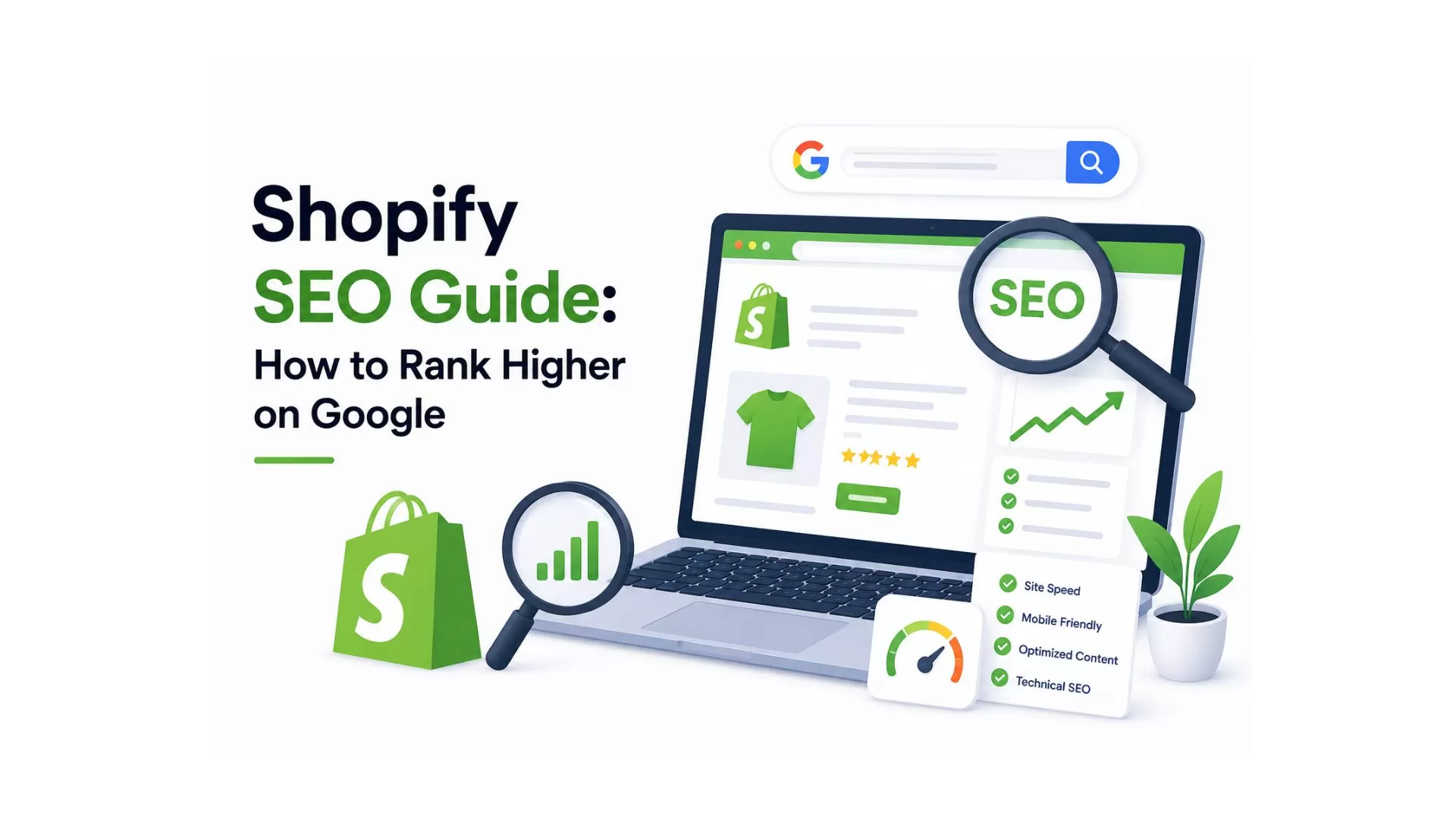
Shopify SEO is the process of optimizing a Shopify store to improve its visibility in search engines like Google. It includes keyword research, technical SEO, product page optimization, collection page optimization, site speed improvements, structured data, internal linking, and content marketing. A well-optimized Shopify store can attract more organic traffic, improve user experience, increase product visibility, and generate more sales without relying solely on paid advertising.
Key Takeaways
- Shopify includes several built-in SEO features, but additional optimization is still required.
- Keyword research is the foundation of every successful Shopify SEO strategy.
- Product pages, collection pages, and blog content should all be optimized for search intent.
- Technical SEO, structured data, and Core Web Vitals play a significant role in rankings.
- Internal linking improves website crawlability and distributes authority across important pages.
- Consistent content publishing helps build topical authority and attract long-term organic traffic.
- Monitoring performance with Google Search Console and Google Analytics helps identify opportunities for continuous improvement.
Search engines remain one of the most valuable sources of long-term traffic for ecommerce businesses. While paid advertising can generate immediate visitors, organic search provides sustainable growth by attracting users who are actively searching for products and solutions.
If your ecommerce business uses Shopify, optimizing your store for search engines should be a core part of your digital marketing strategy.
Shopify provides several built-in SEO capabilities, including customizable title tags, meta descriptions, XML sitemaps, canonical tags, and mobile-friendly themes. However, these features alone are not enough to achieve strong rankings in competitive search results.
To improve visibility, a Shopify store should combine technical optimization with high-quality content, logical site architecture, keyword targeting, and a positive user experience.
Successful Shopify SEO involves much more than adding keywords to product pages. Search engines evaluate hundreds of factors, including website speed, content relevance, internal linking, mobile usability, structured data, page experience, and overall website authority.
This guide explains how to optimize a Shopify store while using AI generated videos to improve product marketing and engagement. Whether you're launching a new store or improving an existing one, these best practices can help you build a stronger foundation for long-term organic growth.
What Is Shopify SEO?
Shopify SEO is the practice of optimizing a Shopify-powered ecommerce store to improve its visibility in search engine results. The goal is to help potential customers discover products and content when searching for relevant keywords.
Unlike general website SEO, Shopify SEO focuses on optimizing ecommerce-specific elements such as:
- Product pages
- Collection pages
- Product images
- Category structure
- Navigation
- Product schema
- Customer reviews
- Internal linking
- Store performance
A successful Shopify SEO strategy balances search engine requirements with customer experience, ensuring that visitors can easily find information, browse products, and complete purchases.
Why Is Shopify SEO Important?
A well-executed SEO strategy can provide long-term benefits for ecommerce businesses.
Increased Organic Traffic
Higher rankings help attract visitors who are actively searching for products or services similar to yours. Unlike paid advertising, organic traffic continues to grow over time with consistent optimization.
Better Product Visibility
Optimized product pages and collection pages are more likely to appear in relevant search results, increasing opportunities for customers to discover your products.
Lower Customer Acquisition Costs
Organic traffic reduces dependence on paid advertising by generating visitors without paying for every click.
Improved User Experience
SEO best practices often improve website usability by making navigation simpler, pages faster, and content more relevant.
Long-Term Business Growth
Unlike short-term marketing campaigns, SEO builds long-lasting visibility that can continue generating traffic and sales over time.
How Does Google Rank Shopify Stores?
Google uses hundreds of ranking signals to determine which ecommerce pages appear in search results. While the exact algorithm is not public, several key factors consistently influence Shopify store rankings.
Website Structure
A clear website hierarchy helps both users and search engines navigate your store.
An effective Shopify structure often follows this pattern:
Homepage → Collections → Product Pages → Blog Articles
Logical navigation improves crawlability and distributes authority throughout the website.
Core Web Vitals
Core Web Vitals measure the overall quality of the page experience.
Key metrics include:
- Largest Contentful Paint (LCP)
- Interaction to Next Paint (INP)
- Cumulative Layout Shift (CLS)
Optimizing these metrics helps improve both user satisfaction and search visibility.
Structured Data
Structured data helps search engines better understand ecommerce content.
Important schema types for Shopify include:
- Product Schema
- Breadcrumb Schema
- Organization Schema
- Review Schema
- FAQ Schema
Proper implementation can improve search result appearance through rich snippets.
Internal Linking
Internal links connect related pages throughout your Shopify store.
Benefits include:
- Improved crawlability
- Better user navigation
- Distribution of page authority
- Increased time on site
Strategic internal linking strengthens the overall SEO performance of your store.
Shopify SEO Checklist
Before optimizing individual pages, it is useful to establish a complete SEO checklist. This checklist serves as a roadmap for improving every area of your Shopify store and ensures that important optimization tasks are not overlooked.
The following sections cover the most important components of Shopify SEO, beginning with keyword research—the foundation of every successful SEO strategy.
1. Perform Keyword Research
Keyword research helps identify the words and phrases potential customers use when searching for products, services, and information.
Without proper keyword research, even well-designed Shopify stores may struggle to attract relevant organic traffic.
Tools such as Google Search Console, Google Keyword Planner, Ahrefs, and Semrush can help identify valuable keyword opportunities.
2. Optimize Your Shopify Store Structure
A well-organized store structure helps both customers and search engines understand how your website is organized. A clear hierarchy improves navigation, distributes link authority effectively, and makes it easier for Google to crawl important pages.
A recommended Shopify store structure looks like this:
Homepage → Collections → Sub Collections (Optional) → Product Pages → Blog Articles
Every important page should be reachable within three clicks from the homepage whenever possible.
A logical hierarchy also improves the overall shopping experience by helping customers quickly find the products they're looking for.
Expert Tip: Avoid creating too many collection levels or unnecessary navigation menus, as they can make crawling more difficult and confuse users.
3. Optimize Shopify URLs
Although Shopify automatically generates URLs, optimizing them where possible improves readability and relevance.
Best Practices
- Keep URLs short and descriptive.
- Include your primary keyword naturally.
- Avoid unnecessary numbers or random characters.
- Use hyphens instead of underscores.
- Keep URL structures consistent across your store.
Example
❌ yourstore.com/products/product-1234-final-new
✅ yourstore.com/products/leather-office-chair
If you rename URLs, always implement 301 redirects to preserve search rankings and avoid broken links.
4. Optimize Shopify Product Pages
Product pages are often the highest-converting pages on a Shopify store. Proper optimization helps them rank for transactional keywords while improving the customer experience.
Write Unique Product Titles
Each product should have a clear, descriptive title that naturally includes the primary keyword.
For example:
Men's Black Leather Office Chair
is more descriptive than
Office Chair Model 204
Avoid stuffing multiple keywords into the title.
Create Original Product Descriptions
Many Shopify stores use manufacturer-provided descriptions, resulting in duplicate content across multiple websites.
Instead, write unique descriptions that explain:
- Product features
- Benefits
- Materials
- Dimensions
- Use cases
- Care instructions
Original content helps search engines better understand your products and provides more value to potential customers.
Optimize Product Images
Images contribute significantly to both user experience and image search visibility.
Best practices include:
- Use descriptive file names.
- Compress images without sacrificing quality.
- Add descriptive alt text.
- Use modern image formats such as WebP.
- Maintain consistent image dimensions.
Good image optimization improves loading speed while supporting accessibility.
Add Customer Reviews
Customer reviews provide fresh, user-generated content and can improve trust.
Review content may also contribute to richer search results when appropriate structured data is implemented.
Improve Product Page Internal Linking
Where relevant, link customers to:
- Related products
- Similar collections
- Buying guides
- Educational blog articles
Example:
If you're selling office chairs, you might naturally link to a blog about choosing ergonomic office furniture.
This strengthens topical relevance while improving user navigation.
5. Optimize Shopify Collection Pages
Collection pages are among the most overlooked SEO opportunities in Shopify stores.
Many businesses simply list products without adding meaningful content.
Instead, every collection page should include:
- A unique title
- An informative introductory description
- Relevant keywords
- Helpful buying information
- Internal links to related collections or blog articles
For example, a Men's Running Shoes collection can include buying tips, sizing guidance, and links to related categories.
This additional content helps search engines better understand the purpose of the page while providing useful information for shoppers.
Use Descriptive Collection Titles
Instead of generic titles like:
Products
Use descriptive titles such as:
- Men's Running Shoes
- Women's Winter Jackets
- Ergonomic Office Chairs
Clear titles improve both SEO and user experience.
Add Introductory Content
A short introductory paragraph helps search engines understand the collection before displaying products.
Aim for content that explains:
- What products are included
- Who they're designed for
- Key features or benefits
- Buying considerations
Keep the content natural and helpful rather than keyword-focused.
Link Related Collections
Collection pages should naturally connect to related categories.
Example:
A collection for Gaming Chairs could link to:
- Office Chairs
- Standing Desks
- Computer Accessories
These internal links improve crawlability and encourage users to explore more products.
6. Improve Shopify Blog SEO
A Shopify blog plays an important role in attracting informational search traffic and supporting commercial pages through internal linking.
Educational articles answer customer questions, build topical authority, and create opportunities to link naturally to product pages and collections.
For example, if you're publishing a guide about choosing ergonomic office chairs, you can naturally link readers to your Office Chairs Collection and relevant product pages without making the content feel promotional.
Publishing helpful, in-depth content also strengthens your store's authority in the eyes of both search engines and potential customers.
Create Content Around Customer Questions
Focus on topics your audience is actively searching for, such as:
- Buying guides
- Product comparisons
- Maintenance tips
- Industry trends
- Frequently asked questions
Helpful content attracts qualified traffic and supports customers throughout the buying journey.
Maintain a Consistent Publishing Schedule
Publishing high-quality content regularly helps search engines discover new pages and signals that your website remains active.
Rather than focusing on quantity, prioritize content that answers real customer questions and complements your product offerings.
7. Optimize Shopify Images for SEO
Images are one of the most important elements of an ecommerce store. High-quality product images help customers make purchasing decisions, but they can also improve your visibility in Google Images and contribute to better page performance when optimized correctly.
Many Shopify stores upload large image files without considering SEO or loading speed, which can negatively affect both user experience and search rankings.
Use Descriptive Image File Names
Before uploading an image, rename the file using descriptive keywords instead of generic names.
Example
❌ IMG_5489.jpg
✅ black-leather-office-chair.webp
Descriptive file names provide additional context to search engines and improve image discoverability.
Add Meaningful Alt Text
Alt text describes an image for search engines and users who rely on screen readers.
Instead of stuffing keywords, write a natural description.
Poor Example: Office Chair Office Chair Best Office Chair Buy Office Chair
Better Example: Black leather ergonomic office chair with adjustable armrests
Alt text improves accessibility while helping search engines understand image content.
Compress Images Before Uploading
Large images increase page loading time.
Compress images before uploading using modern formats such as:
- WebP
- AVIF (where supported)
Smaller image sizes improve Core Web Vitals and create a faster shopping experience.
Use Consistent Image Dimensions
Maintaining consistent image sizes throughout your store improves layout stability and creates a more professional appearance.
Consistent dimensions also reduce layout shifts, which contribute to better user experience.
8. Improve Shopify Technical SEO
Technical SEO ensures that search engines can efficiently crawl, understand, and index your Shopify store.
Even excellent content may struggle to rank if technical issues prevent search engines from accessing important pages.
Submit Your XML Sitemap
Shopify automatically generates an XML sitemap.
Submit it to Google Search Console after launching your store or making significant structural changes.
This helps Google discover new pages more efficiently.
Review Robots.txt
Shopify provides a default robots.txt file that controls crawler access.
Review it carefully if you customize it, ensuring that important pages remain crawlable.
Blocking essential pages by mistake can reduce organic visibility.
Use Canonical URLs Correctly
Duplicate content can occur when products appear in multiple collections.
Shopify automatically adds canonical tags to help search engines identify the preferred version of a page.
Avoid manually changing canonical settings unless necessary.
Fix Broken Links
Broken links create a poor user experience and waste crawl budget.
Regularly review your store for:
- Broken product links
- Missing collection pages
- Deleted blog posts
- Redirect errors
If a page has been permanently moved, create a 301 redirect.
Secure Your Shopify Store
Security contributes to both user trust and search performance.
Ensure your store:
- Uses HTTPS
- Keeps apps updated
- Removes unused applications
- Uses secure authentication
- Monitors suspicious activity
A secure website encourages customer confidence and protects business data.
9. Improve Core Web Vitals
Google uses Core Web Vitals to evaluate page experience.
Although content remains essential, page performance can influence user satisfaction and search visibility.
Largest Contentful Paint (LCP)
Measures how quickly the main content loads.
Improve LCP by:
- Optimizing images
- Using faster hosting infrastructure
- Reducing unnecessary JavaScript
- Leveraging browser caching
Interaction to Next Paint (INP)
Measures how responsive your website is when users interact with it.
Improve INP by:
- Reducing JavaScript execution
- Optimizing third-party scripts
- Improving server response times
Cumulative Layout Shift (CLS)
Measures unexpected movement of page elements during loading.
Reduce CLS by:
- Defining image dimensions
- Reserving space for banners
- Avoiding layout changes after loading
A stable layout improves both usability and customer confidence.
10. Improve Shopify Store Speed
Website speed directly affects customer experience, bounce rate, and conversions.
A faster Shopify store encourages visitors to browse more products and complete purchases.
Remove Unnecessary Apps
Every installed application can add additional scripts.
Regularly review installed apps and remove those that no longer provide value.
Fewer scripts generally improve loading performance.
Optimize Your Theme
Choose a lightweight, well-coded Shopify theme.
Avoid excessive animations and unnecessary features that increase page weight.
Use Lazy Loading
Lazy loading delays the loading of images until users scroll to them.
This reduces initial page size and improves perceived loading speed.
Minimize Third-Party Scripts
Advertising tools, chat widgets, analytics platforms, and marketing scripts all affect performance.
Only install scripts that provide measurable business value.
Monitor Speed Regularly
Use tools such as:
- Google PageSpeed Insights
- Lighthouse
- GTmetrix
Regular monitoring helps identify performance opportunities before they affect customers.
Expert Recommendation
Website speed optimization should be viewed as an ongoing process rather than a one-time task. Review performance after installing new themes, apps, or tracking scripts to ensure your Shopify store continues to deliver a fast and reliable shopping experience.
11. Build a Strong Internal Linking Strategy
Internal linking is one of the most overlooked aspects of Shopify SEO. While many store owners focus on keywords and backlinks, they often ignore how pages connect within their own website.
A well-planned internal linking strategy helps search engines discover important pages, distributes page authority across the website, and guides customers toward relevant products and information.
Instead of adding links randomly, every internal link should provide additional value to the reader.
For example, if you're discussing technical optimization, you can naturally guide readers to an ecommerce website migration guide to learn how site changes can affect SEO.
Similarly, if your article compares ecommerce platforms, mentioning Shopify vs WooCommerce gives readers additional context before making a platform decision.
Link Product Pages to Collection Pages
Every product should belong to a relevant collection.
For example:
- Men's Running Shoes → Running Shoes Collection
- Office Chair → Office Furniture Collection
- Wireless Mouse → Computer Accessories Collection
This improves navigation while helping search engines understand the relationship between products and categories.
Connect Blog Articles with Commercial Pages
Informational content should naturally support commercial pages.
Example:
A blog explaining Shopify SEO can link to your Shopify development services when discussing technical optimization or custom development requirements.
The objective is to help readers find relevant information-not to force promotional links.
Avoid Orphan Pages
Every important page should receive at least one internal link from another relevant page.
Pages without internal links are more difficult for search engines to discover and often receive less authority.
Review your website regularly to identify orphan pages and connect them naturally to related content.
Use Descriptive Anchor Text
Anchor text should clearly describe the destination page.
Good examples include:
- Shopify development services
- ecommerce website migration
- Shopify vs WooCommerce
- technical SEO checklist
- Core Web Vitals
Avoid generic phrases such as:
- Click here
- Read more
- Learn more
Descriptive anchors provide better context for both users and search engines.
12. Common Shopify SEO Mistakes
Many Shopify stores fail to achieve strong rankings because they overlook basic SEO fundamentals. Avoiding these common mistakes can significantly improve your store's long-term performance.
Using Duplicate Product Descriptions
Copying manufacturer descriptions creates duplicate content that offers little value to users or search engines.
Instead, write original descriptions that explain product benefits, features, specifications, and use cases.
Ignoring Collection Pages
Many merchants optimize only product pages while leaving collection pages with little or no content.
Collection pages can rank for broader keywords and should include:
- Introductory content
- Buying guidance
- Relevant internal links
- Optimized metadata
Publishing Thin Content
Pages with very little useful information rarely perform well.
Whether it's a product page or a blog article, focus on answering customer questions thoroughly and providing helpful information.
Missing Image Alt Text
Images without descriptive alt text reduce accessibility and miss opportunities to appear in image search results.
Every important product image should include meaningful alt text.
Poor Internal Linking
Pages that are isolated from the rest of the website are harder for search engines to crawl.
Connect related blogs, collections, products, and service pages using natural anchor text.
Ignoring Technical SEO
Broken links, crawl issues, duplicate pages, and slow loading speeds can limit your store's ability to rank.
Conduct regular technical SEO audits to identify and resolve issues before they affect performance.
13. Best Shopify SEO Tools
Using the right tools helps you monitor performance, identify opportunities, and make informed optimization decisions.
Some widely used tools include:
| Tool | Purpose |
| Google Search Console | Monitor indexing, crawl errors, and search performance |
| Google Analytics 4 | Measure traffic, user behavior, and conversions |
| Google PageSpeed Insights | Analyze page performance and Core Web Vitals |
| Google Keyword Planner | Discover keyword opportunities |
| Ahrefs | Keyword research and backlink analysis |
| Semrush | SEO audits, keyword tracking, and competitor research |
| Screaming Frog SEO Spider | Identify technical SEO issues and crawl errors |
Choose tools based on your business requirements and budget. Even free tools can provide valuable insights when used consistently.
14. How to Measure Shopify SEO Success
Implementing SEO improvements is only the first step. Measuring performance helps determine what's working and where further optimization is needed.
Track metrics such as:
- Organic traffic
- Keyword rankings
- Click-through rate (CTR)
- Indexed pages
- Conversion rate
- Bounce rate
- Revenue from organic search
- Core Web Vitals
- Average engagement time
- Returning visitors
Review these metrics regularly and compare trends over time rather than focusing on short-term fluctuations.
15. Future of Shopify SEO
Search engine optimization continues to evolve as search engines and user behavior change.
Several trends are expected to shape the future of Shopify SEO.
AI-Powered Search
Search experiences increasingly use artificial intelligence to generate summaries and answer questions directly.
Creating comprehensive, well-structured content with clear headings, concise answers, and accurate information helps improve visibility in AI-powered search experiences.
Entity-Based SEO
Search engines are placing greater emphasis on understanding relationships between topics, brands, products, and concepts.
Building topical authority through interconnected content helps reinforce these relationships.
Voice Search
As voice assistants become more common, optimizing content around conversational queries and natural language can improve discoverability.
Visual Search
Consumers increasingly search using images rather than text.
High-quality product photography, descriptive file names, and optimized alt text support better visibility in visual search results.
E-E-A-T
Demonstrating Experience, Expertise, Authoritativeness, and Trustworthiness remains important for long-term SEO success.
Publishing accurate, helpful, and regularly updated content contributes to stronger credibility.
Conclusion
Shopify provides a solid foundation for ecommerce SEO, but achieving sustainable organic growth requires more than built-in features. Success comes from combining keyword research, optimized product and collection pages, technical SEO, structured data, internal linking, fast page performance, and helpful content.
Rather than chasing algorithm updates or quick fixes, focus on building a store that genuinely helps customers find information, compare products, and complete purchases with confidence.
SEO is a long-term investment. Consistent improvements, regular monitoring, and ongoing content development can strengthen your store's visibility, attract qualified traffic, and support business growth over time.