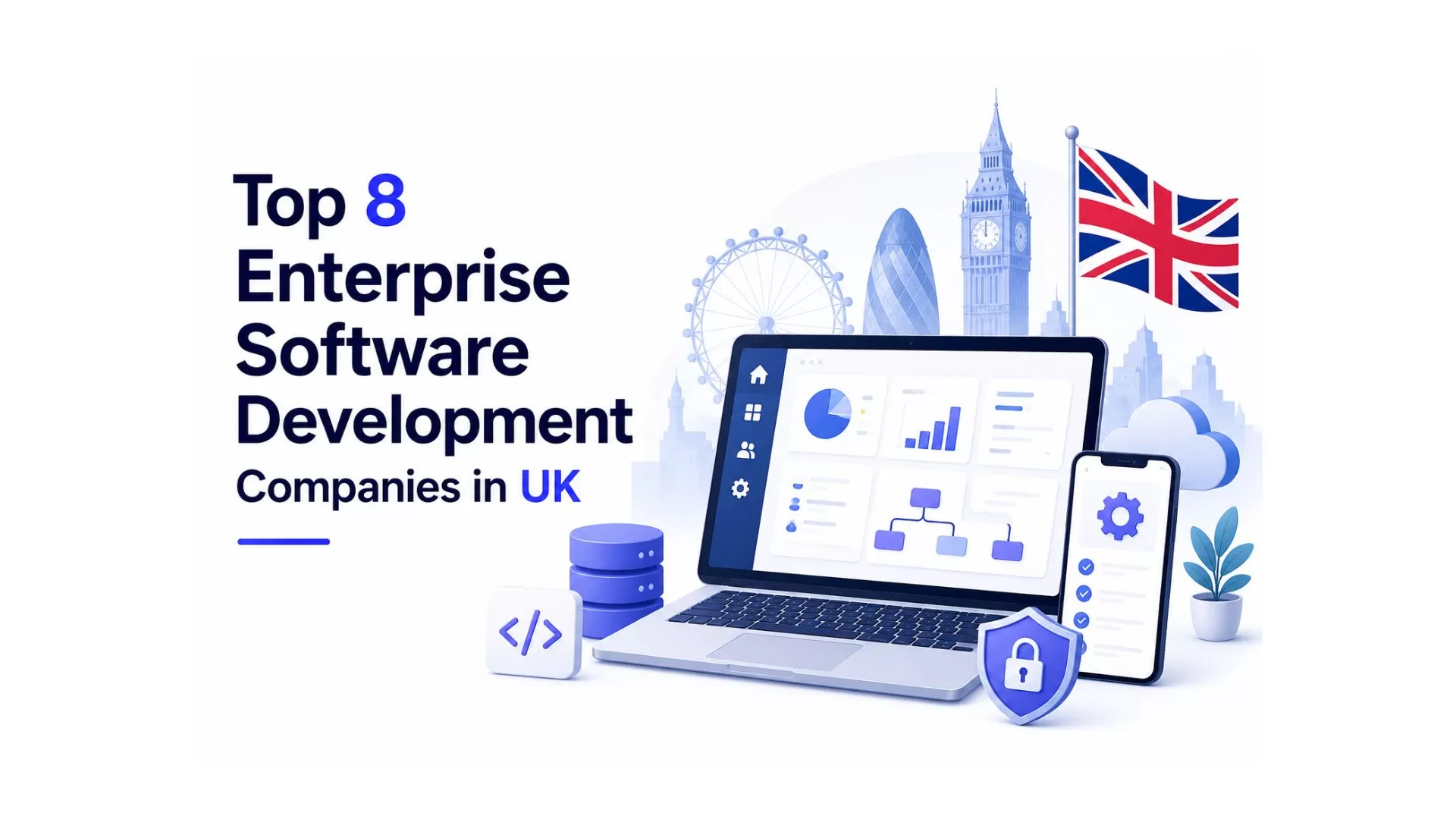
Enterprise software has become a critical investment for organizations looking to improve operational efficiency, automate business processes, enhance collaboration, and support long-term digital transformation. From customer relationship management (CRM) systems and enterprise resource planning (ERP) platforms to supply chain management, business intelligence, and workflow automation, enterprise software enables businesses to manage complex operations through integrated technology solutions.
The United Kingdom is home to many experienced enterprise software development companies that help organizations design, develop, modernize, and maintain business-critical software. These companies work with startups, SMEs, and large enterprises across industries such as healthcare, finance, retail, manufacturing, logistics, education, and government.
However, selecting the right technology partner is not always straightforward. Every organization has different business goals, technical requirements, compliance needs, and scalability expectations. The right development company should not only deliver software but also understand business processes, security requirements, and future growth strategies.
This guide highlights some of the top enterprise software development companies in the UK based on their enterprise software expertise, technology capabilities, service portfolio, industry experience, and ability to deliver scalable business solutions.
Whether you're planning to develop a custom ERP system, CRM platform, internal business application, workflow automation software, or a complete enterprise ecosystem, this guide can help you identify a development partner that aligns with your business objectives.
What Is Enterprise Software Development?
Enterprise software development is the process of designing, building, integrating, and maintaining software solutions that support business operations across departments and large organizations. Unlike consumer applications, enterprise software focuses on improving productivity, automating workflows, managing business data, and enabling collaboration between teams.
Enterprise software is typically designed to handle complex business processes, integrate with multiple systems, and support thousands of users while maintaining high levels of security, reliability, and scalability.
Common examples of enterprise software include:
- Enterprise Resource Planning (ERP)
- Customer Relationship Management (CRM)
- Human Resource Management Systems (HRMS)
- Supply Chain Management (SCM)
- Inventory Management Software
- Financial Management Systems
- Business Intelligence Platforms
- Workflow Automation Solutions
- Document Management Systems
- Enterprise Portals
Modern enterprise software often incorporates cloud computing, artificial intelligence, analytics, automation, and API-driven integrations to improve operational efficiency and support data-driven decision-making.
Why Businesses Invest in Enterprise Software
Organizations adopt enterprise software to streamline operations and improve overall business performance. A well-designed enterprise application can help reduce manual work, improve communication, centralize data, and support business growth.
Some of the primary benefits include:
- Improved operational efficiency
- Better collaboration across departments
- Centralized business data
- Enhanced security and compliance
- Workflow automation
- Real-time reporting and analytics
- Better customer experience
- Scalability for future growth
- Integration with existing business systems
- Reduced operational costs
As businesses continue their digital transformation journey, enterprise software has become an essential investment rather than an optional technology upgrade.
How We Selected These Enterprise Software Development Companies
The companies featured in this guide were selected using multiple evaluation criteria to provide readers with a balanced overview of experienced enterprise software development providers.
Enterprise Development Expertise
We considered each company's experience in developing enterprise-grade software solutions, including ERP systems, CRM platforms, workflow automation tools, and other custom business applications.
Technology Capabilities
We reviewed the technologies and platforms supported by each company, including cloud solutions, AI integration, modern development frameworks, APIs, and enterprise architectures.
Industry Experience
Companies serving multiple industries often have broader experience handling complex business requirements, regulatory compliance, and specialized workflows.
Scalability
Enterprise software should support business growth. We evaluated each company's ability to build scalable, secure, and maintainable solutions.
Service Portfolio
Companies offering consulting, software development, modernization, system integration, cloud migration, and ongoing maintenance were given preference due to their ability to support organizations throughout the software lifecycle.
1. Web Panel Solutions
Web Panel Solutions is a software development company that helps businesses build custom enterprise software tailored to their operational requirements and long-term growth objectives. The company focuses on delivering scalable web applications, enterprise platforms, SaaS products, business automation systems, and AI-powered software solutions that improve productivity and streamline business operations.
By combining modern technologies with a business-first approach, Web Panel Solutions develops enterprise software that supports digital transformation while remaining flexible enough to adapt to changing business needs.
Key Enterprise Software Services
- Custom Enterprise Software Development
- Enterprise Web Application Development
- CRM Development
- ERP Development
- SaaS Product Development
- Business Process Automation
- AI Integration
- Enterprise System Integration
- Cloud Application Development
- Software Maintenance & Support
Industries Served
- Healthcare
- Education
- Retail
- Manufacturing
- Professional Services
- Logistics
- Finance
- Technology Startups
Why Businesses Choose Web Panel Solutions
Organizations choose Web Panel Solutions for its practical development approach, transparent communication, scalable architecture, and ability to create enterprise software aligned with specific business objectives. The company focuses on long-term maintainability, security, and business value rather than one-size-fits-all solutions.
2. BJSS
BJSS is one of the UK's well-established technology and enterprise software development companies, known for delivering large-scale digital transformation projects for public and private sector organizations. The company specializes in developing enterprise applications that help businesses modernize legacy systems, improve operational efficiency, and accelerate digital innovation.
With extensive experience across financial services, healthcare, retail, government, and energy sectors, BJSS focuses on building secure, scalable, and cloud-native enterprise software using agile development methodologies.
Key Enterprise Software Services
- Custom Enterprise Software Development
- Cloud Application Development
- Legacy System Modernization
- Digital Transformation
- Enterprise Integration
- DevOps & Cloud Engineering
- Data Engineering
- Enterprise Application Support
Industries Served
- Financial Services
- Healthcare
- Government
- Retail
- Energy
- Logistics
Why Businesses Choose BJSS
Organizations choose BJSS for its strong engineering culture, enterprise architecture expertise, and experience delivering complex software systems that support long-term business growth and digital transformation initiatives.
3. GoodCore Software
GoodCore Software is a UK-based custom software development company that provides enterprise software solutions for startups, SMEs, and established enterprises. The company focuses on developing business applications that improve operational efficiency, automate manual processes, and streamline enterprise workflows.
GoodCore Software offers end-to-end software development services, from business analysis and solution architecture to application development, deployment, and long-term maintenance. Their collaborative development approach allows organizations to build software tailored to specific business objectives rather than relying on off-the-shelf products.
Key Enterprise Software Services
- Enterprise Software Development
- Business Process Automation
- CRM Development
- ERP Development
- Workflow Management Systems
- Cloud Application Development
- Software Modernization
- API Integration
Industries Served
- Healthcare
- Manufacturing
- Education
- Logistics
- Retail
- Professional Services
Why Businesses Choose GoodCore Software
Businesses value GoodCore Software for its ability to translate complex business requirements into scalable software solutions while maintaining a strong focus on usability, performance, and long-term maintainability.
4. Intellectsoft
Intellectsoft is an enterprise software development company with a global presence and a strong client base in the UK. The company helps organizations modernize business operations through custom software, enterprise applications, cloud solutions, and emerging technologies such as artificial intelligence and blockchain.
Its multidisciplinary development teams work closely with enterprises to design software that improves productivity, supports digital transformation, and integrates seamlessly with existing business systems.
Key Enterprise Software Services
- Enterprise Software Development
- Enterprise Mobility Solutions
- Cloud Development
- AI Integration
- Business Intelligence Solutions
- ERP & CRM Development
- Legacy Software Modernization
- IT Consulting
Industries Served
- Healthcare
- Finance
- Construction
- Retail
- Logistics
- Hospitality
Why Businesses Choose Intellectsoft
Organizations often choose Intellectsoft for its broad technology expertise, enterprise consulting capabilities, and experience delivering scalable software solutions for complex business environments.
5. Waracle
Waracle is a UK digital technology company specializing in enterprise software, cloud-native applications, mobile platforms, and digital transformation initiatives. The company works with organizations looking to improve customer experiences, automate operations, and accelerate innovation through modern technology.
Waracle combines product strategy, software engineering, UX design, and cloud technologies to deliver enterprise solutions that align with long-term business goals.
Key Enterprise Software Services
- Enterprise Application Development
- Cloud Engineering
- Digital Product Development
- Mobile Enterprise Solutions
- Data & AI Solutions
- Software Modernization
- UX/UI Design
- DevOps
Industries Served
- Healthcare
- Financial Services
- Energy
- Retail
- Public Sector
Why Businesses Choose Waracle
Businesses choose Waracle for its user-centered development approach, strong cloud expertise, and ability to deliver secure enterprise applications that improve operational performance and customer engagement.
6. DCSL GuideSmiths
DCSL GuideSmiths is a UK software development company that delivers enterprise software solutions designed to solve complex operational challenges. With decades of experience in custom software engineering, the company supports organizations throughout the entire software development lifecycle, from discovery and planning to deployment and continuous improvement.
The company emphasizes agile methodologies, scalable architecture, and close collaboration with clients to ensure software aligns with business objectives.
Key Enterprise Software Services
- Custom Enterprise Software Development
- Digital Transformation
- Cloud Migration
- Enterprise Integration
- Business Automation
- Software Maintenance
- API Development
- Legacy System Modernization
Industries Served
- Healthcare
- Education
- Government
- Financial Services
- Logistics
- Professional Services
Why Businesses Choose DCSL GuideSmiths
Organizations appreciate DCSL GuideSmiths for its long-standing experience, transparent development process, and ability to build enterprise software tailored to complex business requirements.
7. Vention
Vention is a global software engineering company that partners with startups, mid-sized businesses, and enterprises to build custom software solutions. With a strong presence in the UK market, the company delivers enterprise software that supports digital transformation, business automation, cloud migration, and enterprise modernization initiatives.
Its engineering teams work across multiple technologies, helping organizations develop scalable applications that integrate with existing business systems while maintaining high standards of security, performance, and reliability.
Key Enterprise Software Services
- Custom Enterprise Software Development
- Enterprise Web Applications
- Cloud Software Development
- Business Process Automation
- AI Integration
- Enterprise API Development
- Data Engineering
- Software Modernization
Industries Served
- Financial Services
- Healthcare
- Retail
- Technology
- Logistics
- Manufacturing
Why Businesses Choose Vention
Organizations often choose Vention because of its experienced engineering teams, flexible engagement models, and ability to deliver enterprise software solutions that scale alongside growing business requirements.
8. ELEKS
ELEKS is an enterprise software development company that helps organizations solve complex business challenges through custom software engineering, data analytics, cloud computing, and artificial intelligence. With extensive experience working with enterprise clients worldwide, the company develops secure, scalable, and future-ready software solutions.
ELEKS emphasizes innovation, technical excellence, and strategic consulting to help businesses modernize legacy systems, improve operational efficiency, and accelerate digital transformation.
Key Enterprise Software Services
- Enterprise Software Development
- Enterprise Application Modernization
- AI & Machine Learning
- Cloud Engineering
- Business Intelligence
- ERP Development
- Digital Transformation
- Data Analytics
Industries Served
- Healthcare
- Finance
- Retail
- Manufacturing
- Logistics
- Automotive
Why Businesses Choose ELEKS
Businesses value ELEKS for its strong technical capabilities, enterprise consulting expertise, and experience delivering software solutions for large organizations operating in highly regulated industries.
Enterprise Software Development Cost in the UK
The cost of enterprise software development varies depending on the complexity of the solution, required integrations, development team size, technology stack, security requirements, and long-term maintenance needs.
Unlike off-the-shelf software, enterprise applications are designed specifically around an organization's workflows, making every project unique in terms of scope and investment.
Small Enterprise Applications
Examples include:
- Internal management portals
- Employee management systems
- Workflow automation tools
- Department-specific software
Estimated Cost
£20,000 - £60,000
Medium Enterprise Solutions
Examples include:
- CRM Platforms
- Inventory Management Systems
- Customer Portals
- ERP Modules
- Business Intelligence Dashboards
Estimated Cost
£60,000 - £150,000
Large Enterprise Platforms
Examples include:
- Enterprise ERP Systems
- Multi-department Business Platforms
- Banking Software
- Healthcare Systems
- Manufacturing Management Platforms
Estimated Cost
£150,000 - £750,000+
How to Choose the Right Enterprise Software Development Company
Selecting an enterprise software development company is a strategic business decision that can significantly impact operational efficiency, digital transformation initiatives, and long-term business growth. Beyond technical expertise, organizations should evaluate a company's experience, development methodology, scalability, and ability to deliver software aligned with business objectives.
Below are some key factors to consider before choosing an enterprise software development partner.
Evaluate Industry Experience
Enterprise software requirements vary across industries. A company with experience in your sector is more likely to understand industry regulations, operational challenges, and business workflows.
Look for experience in industries such as:
- Healthcare
- Financial Services
- Manufacturing
- Retail
- Logistics
- Education
- Government
- Professional Services
Industry expertise often reduces development risks and accelerates project delivery.
Review Technical Expertise
Modern enterprise software relies on a combination of technologies rather than a single programming language or framework.
Evaluate whether the company has expertise in:
- Cloud Computing
- Artificial Intelligence
- Machine Learning
- API Development
- Enterprise Integration
- Data Analytics
- Business Intelligence
- Microservices Architecture
- DevOps
- Cybersecurity
A diverse technology stack enables organizations to build scalable and future-ready enterprise solutions.
Understand Their Development Process
An experienced enterprise software company should follow a structured software development lifecycle.
A typical enterprise software development process includes:
- Business Discovery
- Requirement Analysis
- Solution Architecture
- UI/UX Design
- Software Development
- Quality Assurance
- Deployment
- Ongoing Maintenance & Support
A well-defined process improves transparency, reduces project risks, and ensures software quality.
Consider Scalability
Business requirements evolve over time. Enterprise software should be designed to accommodate increasing users, additional business units, new integrations, and future feature enhancements.
Ask questions such as:
- Can the application support business growth?
- Is the architecture cloud-ready?
- Can new modules be added later?
- Does the software support API integrations?
Scalable software reduces redevelopment costs in the future.
Assess Security & Compliance
Enterprise applications often manage sensitive customer information, financial data, and internal business processes.
Choose a company that follows security best practices, including:
- Role-Based Access Control (RBAC)
- Data Encryption
- Secure Authentication
- Audit Logging
- Backup & Disaster Recovery
- GDPR Compliance
- Secure API Development
Security should be integrated into the software development process rather than added after deployment.
Review Client Portfolio & Case Studies
Previous projects provide valuable insight into a company's capabilities.
Look for:
- Enterprise-scale implementations
- Long-term client relationships
- Complex software projects
- Industry-specific case studies
- Proven development expertise
A strong portfolio demonstrates practical experience beyond marketing claims.
Evaluate Long-Term Support
Enterprise software requires continuous maintenance after launch.
Consider whether the company offers:
- Performance Monitoring
- Security Updates
- Feature Enhancements
- Cloud Infrastructure Management
- Bug Fixes
- Technical Support
Ongoing support helps maximize software performance and business continuity.
Future of Enterprise Software Development
Enterprise software continues to evolve as organizations adopt emerging technologies to improve operational efficiency, automate processes, and deliver better customer experiences. The next generation of enterprise applications is expected to be more intelligent, data-driven, and cloud-native.
Several trends are shaping the future of enterprise software development.
Artificial Intelligence Integration
Artificial Intelligence is becoming a standard component of enterprise software rather than an optional feature.
Businesses are integrating AI to:
- Automate repetitive tasks
- Generate business insights
- Improve customer support
- Enhance decision-making
- Optimize business workflows
AI-powered enterprise applications are expected to become increasingly common across industries.
Cloud-Native Enterprise Applications
Organizations are moving away from traditional on-premise infrastructure in favor of cloud-native software.
Cloud-based enterprise applications provide:
- Better scalability
- Improved availability
- Lower infrastructure costs
- Faster deployment
- Simplified maintenance
Cloud adoption also enables organizations to respond more quickly to changing business requirements.
Hyperautomation
Businesses are increasingly combining automation technologies with artificial intelligence to automate end-to-end business processes.
Examples include:
- Invoice Processing
- Employee Onboarding
- Customer Service
- Procurement Workflows
- Supply Chain Operations
Hyperautomation improves operational efficiency while reducing manual intervention.
Low-Code and No-Code Platforms
Low-code platforms are helping organizations accelerate internal software development by reducing the amount of manual coding required.
While complex enterprise systems still require custom development, low-code tools are increasingly used for internal workflows, dashboards, and business applications.
Advanced Data Analytics
Organizations are investing heavily in enterprise software that provides real-time analytics and business intelligence.
Modern enterprise platforms increasingly include:
- Interactive Dashboards
- Predictive Analytics
- Data Visualization
- Executive Reporting
- KPI Monitoring
Access to real-time business insights supports faster and more informed decision-making.
Enterprise Cybersecurity
As cyber threats continue to evolve, security has become a fundamental requirement for enterprise software.
Future enterprise applications will increasingly emphasize:
- Zero Trust Architecture
- Multi-Factor Authentication
- Identity Management
- AI-Based Threat Detection
- Continuous Security Monitoring
Organizations are expected to prioritize secure software development throughout the application lifecycle.
Conclusion
Enterprise software plays a vital role in helping organizations improve efficiency, automate operations, and support long-term business growth. Whether developing an ERP system, CRM platform, workflow automation solution, or custom business application, selecting the right development partner is a key factor in project success.
The companies featured in this guide offer a range of enterprise software development services, technology expertise, and industry experience. Each organization brings different strengths, making it important to evaluate business requirements, technical capabilities, scalability, security standards, and long-term support before making a decision.
As enterprise technology continues to evolve with cloud computing, artificial intelligence, automation, and advanced analytics, businesses that invest in scalable and future-ready software solutions will be better positioned to adapt to changing market demands and operational challenges.



![Top Nearshore Software Development Companies in the USA [2026]](https://webpanelsolutions.com/assets/images/blog/blog_1785238272.webp)