Choosing the right ecommerce platform is one of the most important decisions for any business planning to sell online. The platform you choose affects everything from store management and customer experience to search visibility, scalability, and long-term costs.
Among the many ecommerce platforms available today, Shopify and WooCommerce remain two of the most popular options. Both power millions of online stores worldwide and offer powerful features for businesses of all sizes. However, they are built differently and cater to different business needs.
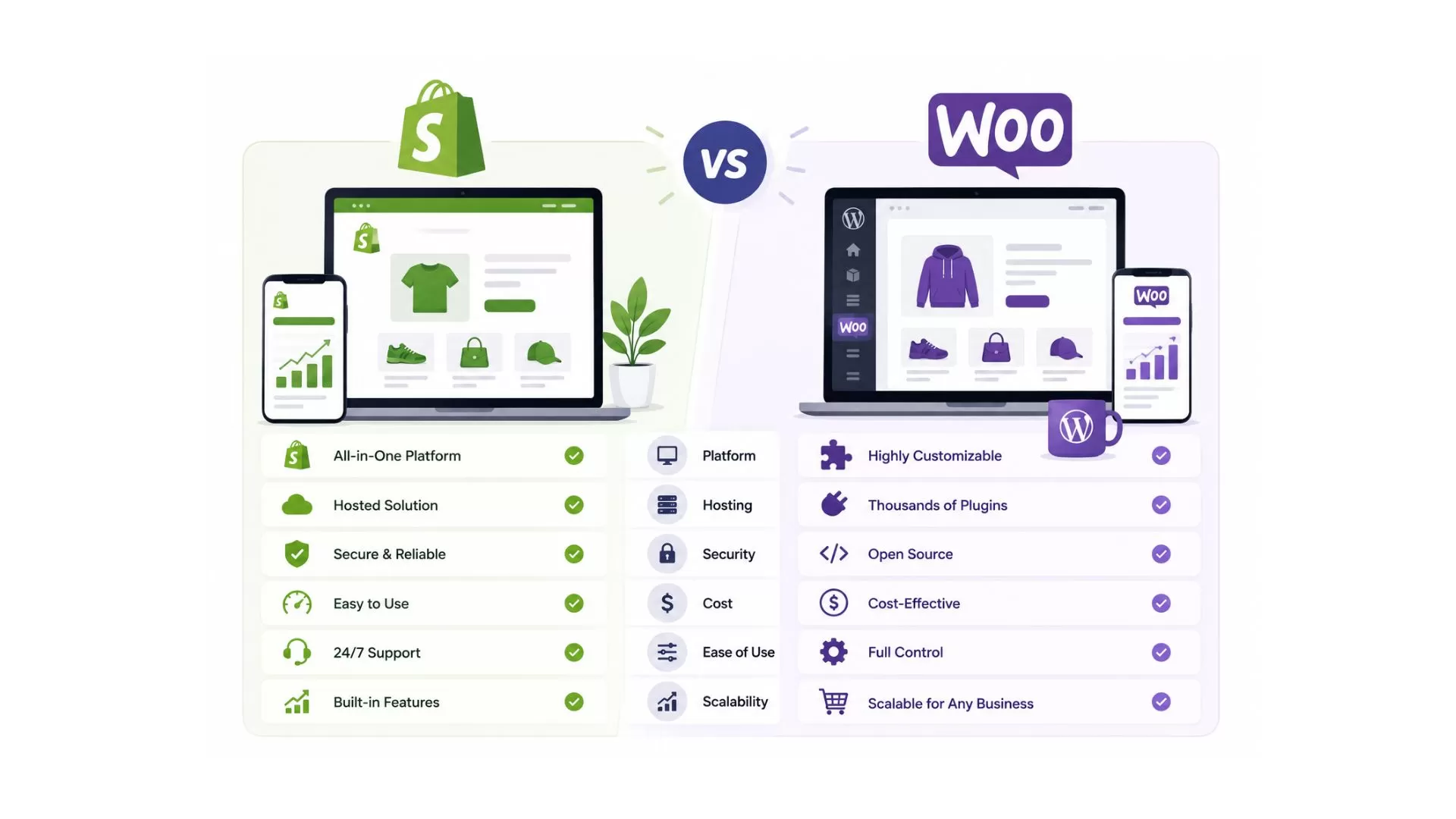
Shopify is a fully hosted ecommerce platform that provides everything you need to launch and manage an online store. WooCommerce, on the other hand, is an open-source ecommerce plugin for WordPress that offers greater flexibility and control.
So, which platform is better for your business?
The answer depends on your budget, technical requirements, customization needs, and long-term growth goals. In this guide, we'll compare Shopify and WooCommerce across key areas including ease of use, pricing, customization, SEO, security, performance, and scalability to help you make an informed decision.
Key Takeaways
- Shopify is easier to set up and manage, making it ideal for beginners.
- WooCommerce offers greater flexibility and customization options.
- Shopify includes hosting, security, and maintenance.
- WooCommerce gives you complete ownership of your website and data.
- Shopify requires monthly subscription fees, while WooCommerce offers more control over costs.
- WooCommerce generally provides more SEO flexibility.
- Both platforms can support growing businesses and large ecommerce stores.
- The right choice depends on your business goals, technical requirements, and growth plans.
What Is Shopify?
Shopify is a cloud-based ecommerce platform that allows businesses to create, manage, and grow online stores without needing advanced technical knowledge.
The platform includes hosting, security, payment processing, inventory management, and store-building tools in a single package. Business owners can choose from a variety of themes, install apps, and manage products through an intuitive dashboard.
If you're new to ecommerce, understanding what Shopify is can help you evaluate whether it aligns with your business goals and technical capabilities.
Shopify is often chosen by businesses that want a simple, reliable solution that minimizes technical maintenance and allows them to focus on sales and growth.
WooCommerce is a free ecommerce plugin built specifically for WordPress. It transforms a standard WordPress website into a fully functional online store.
Unlike Shopify, WooCommerce is self-hosted, meaning you are responsible for selecting hosting, managing updates, and maintaining security. However, this also gives you significantly more control over your website's functionality and customization.
WooCommerce is popular among businesses that require advanced customization, complete ownership, and the flexibility to create unique ecommerce experiences.
Because it is open-source, developers can modify virtually every aspect of a WooCommerce store, making it one of the most flexible ecommerce solutions available.
Shopify vs WooCommerce at a Glance
Before diving deeper, here's a quick comparison of the two platforms:
| Feature | Shopify | WooCommerce |
| Ease of Use | Excellent | Moderate |
| Setup Time | Fast | Moderate |
| Hosting | Included | Self-Hosted |
| Security | Managed | User Managed |
| Customization | Good | Excellent |
| SEO Flexibility | Good | Excellent |
| Maintenance | Low | Moderate |
| Scalability | Excellent | Excellent |
| Ownership | Limited | Full Control |
| Monthly Fees | Required | Flexible |
| Technical Skills | Minimal | Moderate |
Both platforms are capable of supporting successful online businesses. The best choice depends on your specific requirements rather than which platform has more features.
One of the biggest differences between Shopify and WooCommerce is ease of use.
Shopify
Shopify was designed for business owners who want to launch online stores without dealing with technical complexities.
The setup process is straightforward:
- Create an account.
- Select a theme.
- Add products.
- Configure payments.
- Launch your store.
Most users can build a functional online store without coding knowledge.
Shopify also offers a streamlined dashboard that makes product management, order processing, and inventory tracking simple for beginners.
Businesses following a Shopify store setup process often appreciate how quickly they can get online without needing technical support.
WooCommerce
WooCommerce offers more flexibility but requires additional setup.
Business owners must:
- Purchase hosting
- Install WordPress
- Install WooCommerce
- Configure security settings
- Manage updates
- Handle backups
For users familiar with WordPress, this process is manageable. However, beginners may face a steeper learning curve compared to Shopify.
Best Choice for Customization: WooCommerce
If simplicity and speed are your priorities, Shopify is generally the easier platform to use.
Design and Customization
Design flexibility plays a major role in creating a memorable online shopping experience.
Shopify Design Options
Shopify offers professionally designed themes that are responsive, modern, and optimized for ecommerce.
Benefits include:
- Fast setup
- Mobile-friendly layouts
- Consistent user experience
- Easy customization
However, extensive customization may require a Shopify developer or knowledge of Shopify's Liquid templating language.
WooCommerce Design Options
WooCommerce provides virtually unlimited design flexibility.
Businesses can:
- Customize every page
- Build custom themes
- Create unique checkout experiences
- Modify functionality at the code level
Because WooCommerce runs on WordPress, there are thousands of themes and plugins available.
Best Choice for Customization: WooCommerce
Businesses seeking complete creative freedom and advanced customization often prefer WooCommerce.
Shopify vs WooCommerce Pricing
Pricing is one of the most important factors when choosing an ecommerce platform. While both Shopify and WooCommerce can support businesses of all sizes, their cost structures are very different.
Shopify Pricing
Shopify operates on a subscription-based model. Your monthly fee typically includes:
- Hosting
- Security
- SSL certificate
- Platform maintenance
- Basic ecommerce functionality
However, businesses should also consider:
- Premium themes
- Paid apps
- Transaction fees (depending on payment gateway)
- Custom development
The biggest advantage of Shopify pricing is predictability. Business owners know exactly what they will pay each month, making budgeting easier.
WooCommerce Pricing
WooCommerce itself is free to install, but running a WooCommerce store involves additional expenses such as:
- Web hosting
- Domain registration
- SSL certificate
- Premium plugins
- Theme purchases
- Maintenance and support
The actual cost depends on your requirements. A small WooCommerce store may cost less than Shopify, while a highly customized store can become more expensive.
Which Option Is More Cost-Effective?
Shopify is often easier to budget because most essential services are bundled into a single subscription.
WooCommerce provides greater flexibility and allows businesses to choose solutions based on their budget and requirements.
For businesses evaluating total investment, understanding the Shopify website development cost and long-term maintenance requirements is equally important.
SEO Comparison
Search visibility plays a critical role in ecommerce success. Even the best-designed online store will struggle if customers cannot find it through search engines.
Shopify SEO Features
Shopify includes many built-in SEO features:
- Editable meta titles
- Meta descriptions
- XML sitemaps
- Mobile-friendly themes
- SSL security
- Fast hosting infrastructure
Shopify makes SEO implementation straightforward, even for beginners.
However, some advanced SEO customizations may be more limited compared to open-source platforms.
WooCommerce SEO Features
WooCommerce benefits from the flexibility of WordPress, which is widely recognized for its SEO capabilities.
Advantages include:
- Complete URL control
- Advanced schema implementation
- Flexible content architecture
- Extensive SEO plugins
- Custom technical optimization
Businesses that prioritize advanced SEO strategies often appreciate the level of control WooCommerce provides.
Best Choice for SEO Flexibility
Shopify offers strong SEO functionality with minimal setup.
WooCommerce provides greater flexibility for businesses that require advanced SEO customization and content-driven growth strategies.
Security and Maintenance
Security is a major concern for every ecommerce business because customer trust depends on protecting sensitive information.
Shopify Security
Shopify manages:
- Security updates
- SSL certificates
- Platform maintenance
- PCI compliance
- Infrastructure monitoring
Business owners do not need to worry about technical maintenance.
WooCommerce Security
WooCommerce security depends largely on:
- Hosting quality
- Plugin management
- Website updates
- Security configurations
Businesses have greater control, but they are also responsible for maintaining a secure environment.
Best Choice for Managed Security
Shopify is ideal for businesses that prefer a fully managed solution.
WooCommerce is better suited for businesses that want complete control and have access to technical resources.
As your business grows, your ecommerce platform must support increasing traffic, products, and transactions.
Shopify Performance
Shopify provides:
- Managed infrastructure
- Global CDN
- Optimized hosting
- Automatic performance updates
Store owners do not need to manage server performance.
WooCommerce Performance
WooCommerce performance depends on:
- Hosting provider
- Website optimization
- Plugin quality
- Technical implementation
A properly optimized WooCommerce store can perform exceptionally well and support large product catalogs.
Scalability Comparison
Both Shopify and WooCommerce can support growing businesses.
The difference lies in management.
Shopify handles most technical scaling automatically, while WooCommerce gives businesses more control over how they scale their infrastructure.
Apps, Plugins, and Integrations
Modern ecommerce stores often require integrations with marketing tools, CRM systems, payment gateways, inventory software, and analytics platforms.
Shopify
Shopify offers a large app marketplace with thousands of integrations.
Popular categories include:
- Email marketing
- Reviews
- Shipping
- Customer support
- Inventory management
Most integrations are simple to install and configure.
WooCommerce
WooCommerce offers an extensive plugin ecosystem through WordPress.
Benefits include:
- Greater customization
- Advanced functionality
- Flexible integrations
- Open-source development
Developers can also create custom integrations tailored to specific business needs.
Shopify vs WooCommerce for Different Business Types
Choosing the right platform often depends on the type of business you operate.
Best for Startups
Shopify is often preferred by startups that need:
- Fast launch times
- Minimal technical complexity
- Predictable costs
- Easy management
New businesses can focus on growth rather than technical maintenance.
Best for Small Businesses
Both platforms work well for small businesses.
Shopify is attractive because of its simplicity, while WooCommerce appeals to businesses that want greater ownership and flexibility.
Best for Growing Ecommerce Brands
Businesses experiencing rapid growth often evaluate:
- Scalability
- Integrations
- Customization
- Performance
Both platforms can support growth, but the ideal choice depends on operational requirements.
Best for Enterprise Businesses
Larger businesses may require:
- Complex workflows
- Advanced integrations
- Multi-store functionality
- Custom development
WooCommerce often provides more flexibility for highly customized enterprise environments, while Shopify Plus offers enterprise-level capabilities with managed infrastructure.
Choose Shopify If...
Shopify may be the right choice if you:
- Want a beginner-friendly platform
- Prefer managed hosting and security
- Need a faster launch process
- Have limited technical resources
- Want predictable monthly costs
- Prefer a simplified management experience
Businesses looking for professional Shopify development services often choose Shopify because of its ease of use and reliability.
Choose WooCommerce If...
WooCommerce may be the better option if you:
- Need complete ownership of your website
- Want advanced customization
- Rely heavily on content marketing
- Need greater SEO flexibility
- Require custom functionality
- Prefer full control over hosting and infrastructure
Businesses seeking custom ecommerce experiences often benefit from professional WooCommerce development services to maximize flexibility and performance.
Final Verdict
There is no universal winner in the Shopify vs WooCommerce debate because both platforms solve different business challenges.
Shopify is an excellent choice for businesses that want a simple, secure, and fully managed ecommerce solution. It minimizes technical complexity and allows business owners to focus on sales, marketing, and growth.
WooCommerce is ideal for businesses that require greater flexibility, complete ownership, and advanced customization. It offers unmatched control over the ecommerce experience and can be tailored to virtually any business model.
The best platform depends on your goals, budget, technical requirements, and long-term growth strategy.
Before making a decision, evaluate not only your current needs but also where your business is likely to be in the next three to five years.